
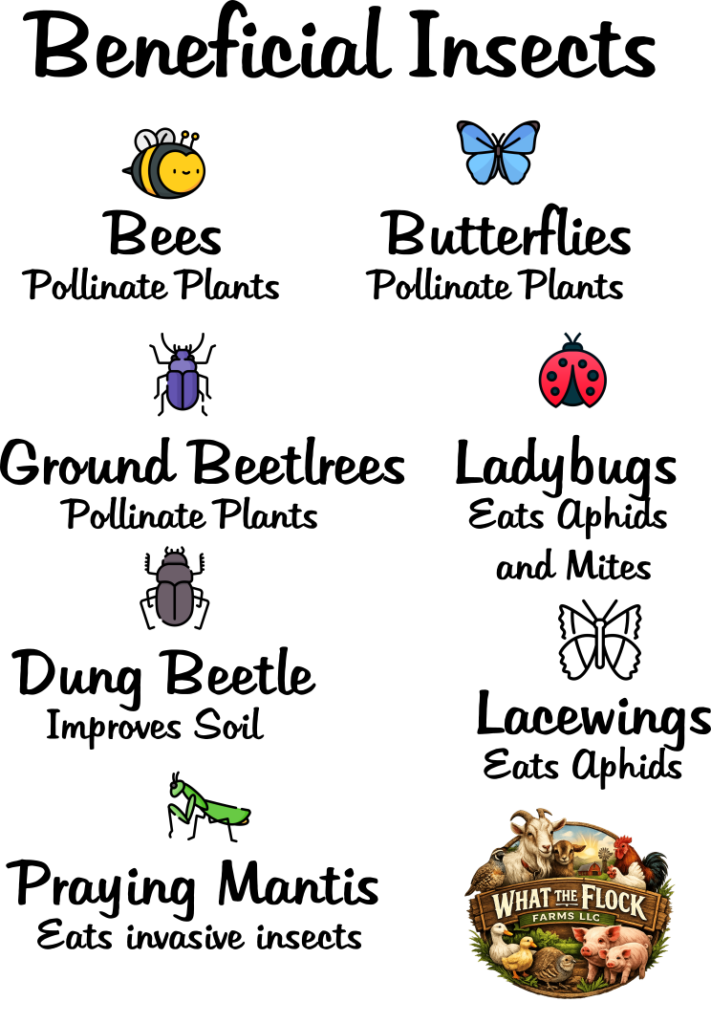
When most people think of insects in the garden, they picture pests chewing leaves or damaging crops. But not all bugs are bad. In fact, many insects play a vital role in keeping gardens and farms healthy, productive, and naturally balanced. Beneficial insects help control pests, pollinate plants, improve soil health, and reduce the need for chemical pesticides.
Whether you run a small backyard garden or a growing farm, encouraging beneficial insects can make a huge difference in the health of your plants and the success of your harvests.
What Are Beneficial Insects?
Beneficial insects are bugs that provide natural advantages to plants and soil. Some prey on destructive pests, while others pollinate flowers and crops. These insects help create a balanced ecosystem where plants can thrive naturally.
Instead of fighting nature, beneficial insects allow gardeners and farmers to work with it.
Natural Pest Control
One of the biggest advantages of beneficial insects is their ability to control harmful pests without chemicals. Predatory insects feed on common garden pests like aphids, mites, caterpillars, whiteflies, and beetles.
Ladybugs
Ladybugs are one of the most recognized beneficial insects. Both adult ladybugs and their larvae feed heavily on aphids and other soft-bodied pests. A single ladybug can eat dozens of aphids per day.
Lacewings
Lacewing larvae are often called “aphid lions” because of their aggressive appetite for pests. They help control aphids, mealybugs, caterpillars, and mites naturally.
Praying Mantises
Praying mantises are skilled hunters that feed on a variety of insects that may damage crops and garden plants.
Pollination Power
Many beneficial insects are also pollinators. Without pollinators, many fruits, vegetables, herbs, and flowers would struggle to produce.
Bees
Bees are among the most important pollinators in agriculture. They help increase yields in crops like cucumbers, squash, tomatoes, berries, and fruit trees.
Butterflies
Butterflies not only add beauty to gardens but also assist with pollination while supporting a healthy ecosystem.
Healthier Soil Ecosystems
Some insects improve soil quality by breaking down organic matter and helping nutrients return to the soil.
Ground Beetles
Ground beetles feed on harmful insects living in the soil while helping maintain a balanced underground ecosystem.
Dung Beetles
On farms with livestock, dung beetles help break down manure naturally, improving soil health and reducing flies.
Reduced Need for Chemicals
Encouraging beneficial insects can lower pesticide use significantly. Overusing chemicals often kills both harmful and helpful insects, disrupting the natural balance of the ecosystem.
By supporting beneficial insect populations, gardeners and farmers can:
- Reduce chemical costs
- Protect pollinators
- Improve soil health
- Grow healthier plants naturally
- Create safer environments for people and animals
How to Attract Beneficial Insects
Creating a beneficial insect habitat is easier than many people think.
Plant Diverse Flowers
Flowers like marigolds, dill, yarrow, lavender, sunflowers, and alyssum provide nectar and pollen that beneficial insects need.
Avoid Broad-Spectrum Pesticides
Many pesticides kill beneficial insects along with pests. Use natural or targeted solutions whenever possible.
Provide Water Sources
Small shallow dishes with water and stones can help insects stay hydrated.
Leave Some Natural Areas
Wildflower borders, mulch, logs, and native plants give beneficial insects shelter and breeding areas.
Final Thoughts
Beneficial insects are some of the hardest-working partners a gardener or farmer can have. From pest control to pollination and soil improvement, these tiny helpers support healthier plants and stronger harvests naturally.
Instead of viewing all bugs as enemies, learning which insects help your garden can transform the way you grow. A healthy ecosystem filled with beneficial insects creates a more sustainable, productive, and thriving farm or garden for years to come.