
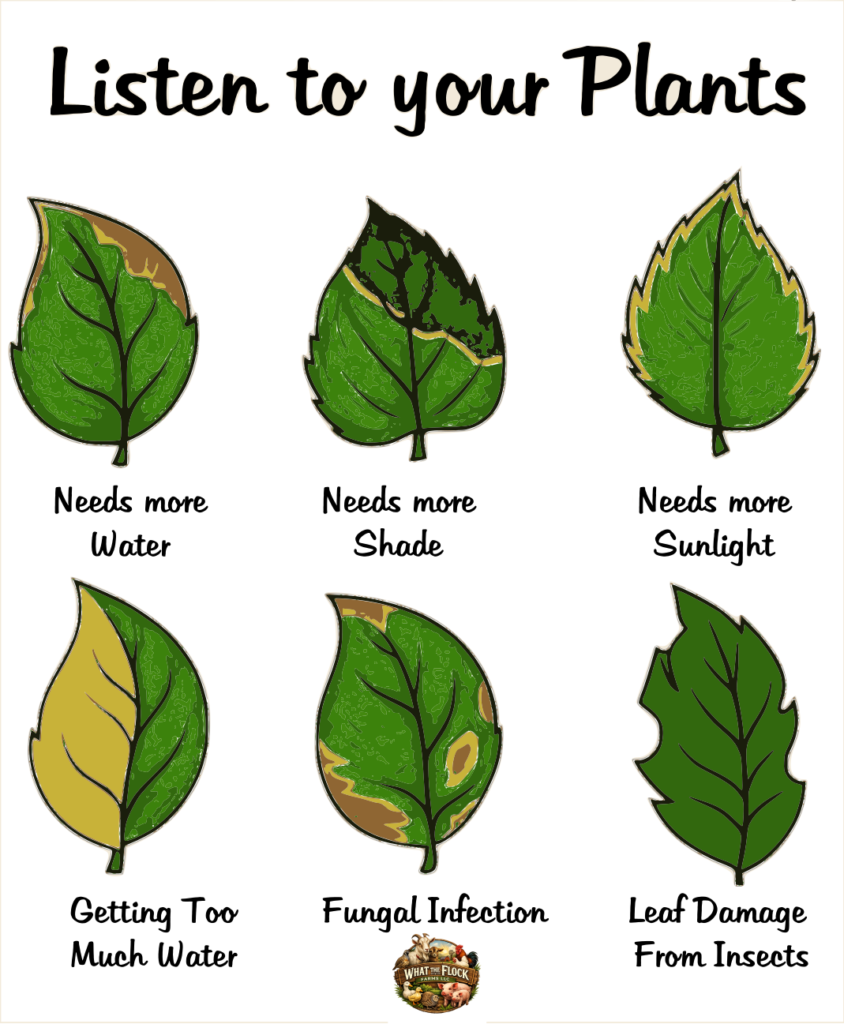
One of the easiest ways to understand what your plants need is by paying attention to their leaves. Leaves act like a warning system, showing signs when a plant is stressed, unhealthy, or thriving. Learning how to read these changes can help you fix problems before they become serious.
Here are some common leaf changes and what they may mean for your plants and garden.
Wilting or Drooping Leaves — Your Plant Needs Water
When leaves become limp, droopy, or soft, your plant is often thirsty. Plants rely on water pressure inside their cells to stay upright. Without enough moisture, leaves lose firmness and begin to wilt.
Common Signs:
- Drooping stems and leaves
- Dry soil
- Crispy leaf edges
- Leaves curling inward
What To Do:
Water deeply and consistently. Early morning watering is usually best because it allows moisture to soak into the soil before the heat of the day.
Yellow Leaves — Too Much Water
Yellowing leaves are one of the most common signs of overwatering. When roots sit in waterlogged soil, they struggle to absorb oxygen, leading to stress and root rot.
Common Signs:
- Yellow leaves starting near the bottom
- Mushy stems
- Wet soil that stays damp for days
- Slow growth
What To Do:
Allow the soil to dry out between waterings and improve drainage if needed. Raised beds and well-draining soil mixes can help prevent root problems.
Brown or Burnt Leaves — Too Much Sunlight
Some plants thrive in full sun, while others prefer partial shade. If leaves appear scorched, dry, or bleached, your plant may be receiving too much direct sunlight.
Common Signs:
- Brown crispy edges
- White or faded patches
- Curling leaves
- Dry spots on exposed surfaces
What To Do:
Move potted plants into partial shade or provide shade cloth during the hottest part of the day. Mulching around plants can also help keep roots cool.
Pale or Stretching Leaves — Not Enough Sunlight
Plants that need more sunlight often become weak and leggy as they stretch toward light sources. Leaves may appear pale green or smaller than normal.
Common Signs:
- Thin stems
- Sparse growth
- Leaning toward windows or sunlight
- Small or pale leaves
What To Do:
Move the plant into a brighter location with more direct sunlight. Most vegetables require at least 6–8 hours of sun daily.
Spots or Powder on Leaves — Fungal Infection
Fungal diseases are common in humid conditions or overcrowded gardens. Early treatment can help stop the spread before the entire plant becomes affected.
Common Signs:
- White powdery coating
- Black spots
- Yellow rings around spots
- Mold-like growth
What To Do:
Remove damaged leaves, increase airflow around plants, and avoid watering directly on foliage. Organic fungicides or neem oil may also help control fungal problems.
Holes and Chewed Leaves — Insect Damage
Not all bugs are bad, but certain insects can quickly damage crops and flowers. Chewed leaves are usually one of the first warning signs.
Common Signs:
- Holes in leaves
- Ragged edges
- Sticky residue
- Visible insects or eggs under leaves
Common Culprits:
- Aphids
- Caterpillars
- Beetles
- Slugs
- Grasshoppers
What To Do:
Inspect plants regularly and remove pests early. Companion planting with marigolds, basil, mint, and lavender can help naturally deter harmful insects.
Healthy Leaves Mean Healthy Plants
Your garden is constantly communicating through leaf color, texture, and shape. By learning to recognize these signals early, you can prevent larger problems and keep your plants healthy throughout the growing season.
A quick walk through your garden each day can reveal signs of stress before plants become seriously damaged. Healthy leaves are often vibrant, firm, and full of life making them one of the best indicators of a thriving garden.
At What The Flock Farms LLC,we believe successful gardening starts with understanding nature and working alongside it. The more you observe your plants, the more your garden will reward you.